Pages

.

Gingered Carrot Soup for Taste and Create

Hi all!  This is my first participation in Taste and Create. Taste&Create event started by Nicole of ForTheLoveOfFood and is hosted by Min of BadGirlsKitchen. For this month I have been paired up with Min of BadGirlskitchen. Those who love eating non vegetarian food, you will love exploring her blog. She has some very  interesting  vegetarian recipes,of which, very conveniently I picked up a comfortable soup…the carrot and ginger. The combo sounded very interesting These day’s I am more into providing nutritious food to my younger one,  this selection helped me there.
The soup comes across as a  quickie  with a delectable taste. The ginger provides the zing to the mild carrot and the all spice provides the additional flavors along with the ever welcome cashew nuts. I adjusted some amount of spices to suit our palate.The original recipe one can read here.
Ingredients
1lb carrots/450gms cubed/grated
3/4 cup chopped onions
2 garlic pods
1 tbsp grated ginger
3-4 tbsp lemon juice
1/2 cup toasted cashew nuts
2-3 tsp olive oil/butter
Spices
1/4 tsp all spice ( I did not have, so made my own substitution) check here
1/2 tsp white pepper (not used in original recipe)
1/4 tsp roasted cumin pwd
1/4 tsp roasted fennel pwd
1/4 tsp mint pwd
1/4 tsp cinnamon pwd
salt to taste
Method
Peel and wash the carrots and grate them. Boil them in 4 cups of water.
Heat olive oil and saute the onions, followed by ginger and crushed garlic. Add all the spices, salt and let it cool.
Toast the cashew nut. and mix it with the onions and blend. Pour in the carrots and blend further.
Bring the soup to a boil . Remove from flame and add lemon juice, mix properly and serve.
reade more... Résuméabuiyad

Bissi Bele Bhaath and Karnataka Style Sambhar Masala

The first time I had visited S's family when we were getting engaged my MIL had asked my father what would he like her to cook. My dad very gladly had said Bissi bele bhaath. During his short stint in Bangalore he had started liking Bissibele Bhaath , Pesarattu, Vaangi Bhaath and many more... So for him it was like a wish come true . And the bhaath was superb. So when I got married I grabbed the first opportunity that I got to learn the recipe.

When my MIL taught me how to cook the Bhaath in the Karnataka style, I could not believe how simple it was and yet so tasty and healthy. As explained by her Bissi means 'hot' bele means 'daal' and anna means 'Rice" so it actually means " hot rice and daal cooked together".

As the name indicates it requires very basic ingredients readily available in the kitchen and if all the chopping is done it takes no time to cook. It can be an ideal meal if you are expecting guests for lunch/dinner....keep all the veggies chopped and refrigerate. Just cook the Bhath an hour before the guests are to arrive.

The only difficulty I feel with the Bhaath is that you should have a bed ready for slumbers as the Bhaath sits tight in your stomach and makes you feel very drowsy, so as a caution I do not make it on week days.

The best way to serve the Bhaath is with a dollop of ghee on top along with plain Potato wafers (crispies) and raita.

Before I tell you how I made the Bhaath and Raita it's important to know how the Sambhar Masala is made in my kitchen ( Kannara version) as the masala gives the main flavor to the Bhaath. This Sambhar Masala again is my MIL's recipe .


Ingredients for the Sambhar Masala


2 cups red chilies ( I used bedagi and guntur)

1 cup Coriander seeds

1/4 cup Bengal Gram ( Chana Daal)

1 tsp Fenugreek seeds ( Methidana)

2 sticks cinnamon ( dalchini)

3/4 cup grated coconut(dry)

2 tsp oil


Method for Sambhar Masala

  • Heat oil and add Fenugreek and Cinnamon followed by the daal.
  • Roast on a medium flame for a few minutes till the daal turns pink then add the coriander seeds and roast.
  • Add the chilies and roast for a few minutes till they become lightly crisp.
  • Now add the coconut and roast for a minute and switch off the flame. Let the contents be there in the pan and keep stirring till the pan cools a bit.(This avoids burning)
  • Cool the ingredients and then grind it to fine powder in a coffee grinder.

The final product(Sambhar Masala) looks like this


Ingredients For Bissi Bele Bhaath

1 1/2 cups rice

1 cup tuvar daal (yellow lentils)

4 medium size potatoes (cubed)

3 medium sized onions (sliced)
1 large carrot ( cubed )

3/4 cup peas

15- 20 spinach leaves roughly chopped(can be omitted)

10-15 french beans cut into 1inch pieces

tamarind pulp as per your taste

salt as per your taste

about 1 - 11/2 tsp cinnamon pwd

1/2 tsp clove powder (I add this my MIL does not)

1 tsp turmeric pwd

4 tbsp sambhar masala

a few sprigs curry and coriander leaves

2-3 dry red chilies

oil for cooking

mustard seeds 2 tsp


Method of making Bhaath

  • Heat oil and add mustard seeds , curry leaves and red chilies.
  • Add sliced onions followed by all vegetables and saute.
  • Add tamarind pulp, turmeric, sambhar masala, cinnamon and clove pwd, and mix properly.
  • Now add the washed rice and daal and mix it properly.

  • To the mix add about 12 cups of water and chopped coriander (I added 13 cups as I like eating the Bhaath in a semi liquid state).
  • Pressure cook till 4 whistles.
  • Serve the bhaath hot with a spoon of ghee along with some raita and crispies.
  • The addition of cinnamon and clove pwd provide an exquisite flavor to the Bhaath.


Ingredients For The Vegetable Raita

1 small onion finely chopped

1 large tomato finely chopped

1 cucumber finely chopped

2 green chilies finely chopped

2-3 tsp coriander finely chopped

1 cup thick curds

1/2 tsp sugar

salt to taste

3/4 tsp roasted cumin pwd


For the Tempering

A spoon of oil

1/2 tsp Mustard seeds

a spoon of chana and urad dal mixed


Method of Making Raita

  • Mix all the ingredients of Raita and adjust the consistency by adding water.
  • Heat oil and mustard seeds and the urad-chana daal mix. Let the daals turn
    golden brown and pour it on the Raita. Mix and chill for an hour before serving.
reade more... Résuméabuiyad

Dum Arvi (Colocasia)


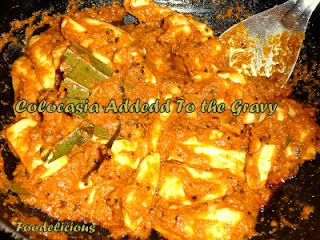
Now that both the kids are back to school I get a lot more time in the morning. One of these days I was in a mood to cook something exquisite . I had been planning to cook a curry using 'Dum' method of cooking since some time, so I thought let me grab the opportunity . My house was silent and I was able to concentrate properly with no one around. And the patience of cooking the curry on 'Dum' resulted in a finger licking curry.


'Dum' means to 'breathe in' signifying the steam and 'Pukht' means 'to cook'. So Dum Pukht means cooking in the steam and prevent it from escaping. The cuisine, the origin of which dates back to the 1780's was popular at the time of Nawab Asaf -ul-Daulah, the ruler of Awadh. This cuisine came by sheer luck when the state was hit by a famine and the unemployment was high. The Nawab decreed the construction of the giant edifice Bara Imambara to provide employment to many. By royal decree too, the arrangements were made to provide food. Enormous containers were filled with rice, meat, vegetables and spices, and sealed. Hot charcoal was placed on top and fire beneath while the slow cooking ensured the food was available day and night. The result was extraordinary, for when the containers were unsealed, splendid aromas attracted even the royal attention. The 'Dummed' cuisine was perfect for the royal table. Exotic dishes evolved in which the fragrances intermingled, with exqisite results.

The Dum Pukht cooking emerged in four major centres - Lucknow, Hyderabad, Kashmir and Lahore. It is represented by it's own taste and flavour in all the 4 places.
Here's what I used and how I made Dum Arvi.
Ingredients
350 gms of Colocasia ( Arvi )- Parcooked and peeled
4 small onions roughly chopped
5-6 garlic pods
an inch of ginger
5 tbsp tomato puree ( I used the tetrapak)
1/4 -1/2 cup curds (check the sourness)
spices-
2tsp red chili pwd
1tsp cumin pwd
salt to taste
1 tsp turmeric pwd
4 tsp coriander pwd
1 -1/2 tsp garam masala
For Tempering
Oil to cook
1 tsp ajwain (carom seeds)
1 1/2 tsp fennel seeds
1 tsp mustard seeds
2 bay leaves
For the seal
softly kneaded wheat flour dough

Method
  • Grind together onion, ginger and garlic to a smooth paste.
  • Cut each Colocasia into 4 long pieces.
  • Heat oil and add mustard. Once the mustard crackles add the bay leaves, carom and fennel seeds.
Add the onion paste and roast in nicely on low flame till oil seapartesand leavesthe edges. Keep adding 1 tbsp of water to the masala if it sticks to the pan and starts scorching.

  • Now add the tomato puree and saute for a minute.
  • In a bowl mix thick curd with all the spices. Remove the pan from the flame and add curds and mix ( This prevents curds from curdling).
  • Put the pan back on flame and cook the masala till the oil separates.


  • Now add the Colocasia, mix propelry. Add a cup of water and bring the curry to a boil.
    • Cover the pan with a lid and seal the joint with the wheat dough.( Make long thin rope of wheat dough and press it on the joint ).
      • Put the pan on a heavy base Tava (Griddle). Let it cook on low flame(Dum) for 45 mins to one hour.
      • Remove the seal. (This will become dry)
      • Serve it with Naan/Paratha/Hot rice.
      • Serves four.


        reade more... Résuméabuiyad

        Upvasacha Kairi Takku and Mango Muramba


        Mangoes are indigenous to Indian subcontinent.A large variety of mangoes are abundantly available during summer some of them being Dashahari, Badam, Begampalli, Chousa ,Kesar and ofcourse Hapus (Alphonso) which largely gets exported and is quite expensive.It has an exquisite flavor which makes it very popular.
        Like the Chocolate I believe there would be very few who would not enjoy eating mangoes. It is the most extensively exploited fruit for food, juice, colour, flavor, fragrance etc. making it a common ingredient for functional foods & hence often called superfruit.


        I have got into my final purchase phase of Mangos as the season is going to end in a few days. I wanted to make a batch of Maavinkayi Chutney which I could use later. Fortunately/unfortunately when I grated the raw mango and tasted it I found it sweet. The chutney needs very sour mango and I was left with 1 Kg of grated sweet and lightly sour mango. I was stuck and was just not able to think, what I should do with them. But gladly my brain did help me in telling that I should call my mom. Mommy dear had an instant solution and told me to make Takku and Muramba. I was sitting pretty now that I knew what I had to with the mangoes and was hating myself for not having thought of it first!!


        Both the recipes I have been eating throughout my childhood as my mom made them every summer . Me and my father used to hog on the Takku and Muramba was used to eat with Roti or Paratha or with fruit custard. Muramba is quite like Jam, the only difference being that in Jam the fruit is cooked and mashed but in Muramba small cooked pieces are used. The Takku is normally eaten in a similar fashion as we eat pickle or chutney and can be eaten during fasts(Upvasa) . The Takku lasts for a month and should be refrigerated . Muramba lasts for a year or more if a good preservative is added.


        Both the recipes are my entries to Mango Mela at cooking4allseasons hosted by Srivalli.


        Ingredients for Upvasacha Kairi Takku


        2 cups grated raw mango
        4tbsp red chilli pwd
        salt to taste

        Method for Takku
        • Mix all the ingredients and fill it in a jar and keep it in sun for 5-6 days. Let the mango imbibe the spices and release it's own juices.
        • Mix it once or twice a day. After 5-6 days the Takku is ready.
        Tip
        For those who can not keep the Takku in sun, pressure cook the raw mango for 10 mins without putting the weight. And then mix salt and chilli pwd.


        Ingredients for Mango Muramba
        2 cups grated mango
        3 1/4 cups sugar
        6-7 cardamom
        1/4 tsp saffron
        1/2 tsp citric acic
        1/2 tsp sodium benzoate

        Method
        • Pressure cook the raw mango with a little water till you get 2 whistles.
        • Cool it for 3-4 hrs and then strain the water. Use this water to make sugar syrup.
        • In a pan take the sugar and add the water enough to immerse the suagr.
        • Boil the sugar solution till you get a three string consistency ( Goli band / Pakki chashani). Check it by putting a drop of it in a bowl of water, if the drop solidifies immediately the syrup's ready.
        • Now add the steamed raw mango, citric acid and cook it in the sugar syrup till you get a honey like consistency. Cool and add crushed cardamom, saffron and 1/2 tsp of sodium benzoate (preservative).


        reade more... Résuméabuiyad

        Okra in Poppy and Sesame


        Lady's finger or Okra is a favorite for a lot of people.The Okra plant is thought to be of African origin and was brought to the US by the African slaves about 3 centuries ago. It hails to the same family of Hibiscus and Cotton (mallow family).


        Okra is rich in dietary fibre, Vit A, C, K and Vit B6. It is rich in minerals and is good for people on diet as it's low in saturated fats, Cholesterol and Sodium.

        Okra is liked by everyone at my place and everyone wants to have the last bite. S likes it so much that he can eat the subzi without roti or rice.This is a very simple recipe of Okra which can be cooked really fast and with very basic ingredients.I made this subzi without onions or garlic so that the flavor of the sesame and poppy was enhanced.

        Both poppy seeds and sesame have mild flavors so while adding the spices care should be taken that it should not lose the original flavors and then rest assured of the delectable flavors they will yield.

        Here is what I did to my Okra


        Ingredients

        Okra-650 gms (cut into diagonal slices)
        4-5 tbsp oil
        1/2 tsp mustard seeds
        1 1/2 tsp turmeric
        2 tsp red chilli pwd
        3 tsp coriander pwd
        3-4 tsp lemon juice( add more if one likes sour)
        2tbsp poppy seeds
        2 tbsp sesame seeds
        1/2 tsp asafoetida
        3/4 tsp Goda Masala/garam masala
        salt to taste

        Method

        • Heat oil and add mustard followed by poppy seeds and sesame seeds. Add asafoetida and a part of the turmeric. Take precaution that the poppy and sesame do not get burnt.

        • Add the okra , salt and half of the lime juice. Mix and lower the flame.

        • The Okra will release the sticky threads but the lime juice will reduce it.

        • Once the Okra is done add the remaining lime juice, turmeric, red chilli pwd, coriander pwd and goda masala ( or Kala masala , is used readily by all maharashtrians for their day to day cooking). The recipe of Goda masala you can find here.

        • Give it a final stir and then switch off the gas. The Okra is done.

        • Serve it with hot rotis smeared with ghee.

        • Serves four people.
        This is my entry to Think Spice- Sesame hosted by Padmajha Suresh of Seduce your tastebuds


        reade more... Résuméabuiyad

        Tangy Palak in Dal

        ,


        Introducing greens in the food is a big hurdle for a lot of moms, I am glad I am not one of them. Both my kids eat greens without making any fuss, the only condition is to keep making different versions and whatever you make, it should not be bland.


        Greens are available in lot of variety and abundantly in the winters but in summers getting the normal veggies is a tough task as there are minimum options available. One has to keep cooking the same veggies again and again trying to add different flavors to them. So when I found this fresh looking spinach I grabbed it eagerly. The nutrition conscious mother could see Iron , haemoglobin in front of her eyes.


        Now the task was to make something new and good to taste ( the three men have a pampered palate). I was again down with fever and had no taste in my mouth so could imagine all tangy things- paani poori, chaat etc.... which will bring back some taste to my mouth, hence I thought of adding tamarind (kuchh khatta ho jaye). I normally use it only for my Saaru and Sambhar but was sure it will give good taste to the spinach. When I served it for the lunch S commented it tastes like Ulli Theeyal (which is a Kerala delicacy and is very tangy). All three of them liked it and S said save some for dinner.


        Ingredients
        3/4 cup boiled and mashed pigeon pea(tuvar) or red lentil(masoor)
        2 cups chopped spinach(Palak)
        5 tbsp chopped cilantro
        2 onions chopped
        4 garlic crushed
        few curry leaves
        1/2 tsp mustard seeds
        1/2 tsp cumin seeds
        1/2 tsp fenugreek seeds
        a big pinch asafoetida
        2-3 tbsp thick tamarind pulp
        1/2 tsp turmeric
        2 tsp red chilli pwd
        2 tbsp coriander pwd
        4-5 tbsp oil for cooking
        2-3 dry red chilli

        Method
        • Heat oil and add mustard,cumin and fenugreek. When they splutter add dry red chilli , curry leaves , asafoetida followed by crushed garlic.
        • When the garlic turns light brown in colour add the onions and saute it light brown.
        • Add the spinach , cilantro ,tamarind juice and salt. Mix , cover and cook. Adding tamarind with spinach ensures that the spinach absorbs the tanginess.
        • When the spinach is done and the water has dried ( spinach leaves water)add chilli,turmeric,coriander pwd and saute till the spices are nicely roasted.
        • Add the cooked dal and water and mix . Bring it to a boil and keep the consistency semi liquid.
        • Serve hot with rice or chapati/plain paratha.


        reade more... Résuméabuiyad

        Healthy Multigrain Masala Poori


        Kids school is all set to begin in the next week and they are still up with their demands. My younger one wanted to have a fried snack. Fried's at my place are surely a delicacy as I rarely indulge myself into deep frying.This time I obliged him as he is still set to enjoy his last few days of freedom and I am also happy watching the light showers which has made the neighbourhood appear green again. Rains and fries do gel well.


        It's a normal scene here in India to watch people eating garam pakoras in the monsoon.Though we are still experiencing preshowers but one can still smell pakoras getting fried in the neighbourhood and the mouth starts watering. Who can hate a plate of hot Pakoras?

        Today in this calorie conscious world we try to balance all the essential nutrients with minimum fats, though it's not that fats are not important, infact they are the most important source of energy for satisfactory growth and physical activity. They are a problem, when our body is not able to metabolise it properly and start storing it in the form of adipose tissue, thats why Doctor's recommend to use a mix of oils or to keep changing the oil ( I call this fooling our body). It's not a problem with the children as their body metabolic rate is much higher than ours; but I still stick to the slogan 'nothing in excess is good for the body'.


        Coming back to my son's demand, I wanted him to have his fried snack in a healthy way, so the thought of adding multigrain flour to the Pooris came in. The end result was a thumbs up from all the three men in my life and I was happy that I provided a nutritious breakfast. The Pooris go well with the morning newspaper and a cup of tea ( I should not say this as I am a teetotaller but holds good for S).


        Ingredients
        2 cups whole wheat flour
        1 cup multigrain flour
        2 tbsp gram flour (besan)
        2 tbsp rice flour
        1 tbsp white sesame seeds
        3 small spoon red chilli pwd
        1 small spoon turmeric
        3 small spoon coriander pwd
        1/2 small spoon garam masala
        salt to taste
        a little chopped cilantro
        oil for deep frying +2tbsp


        Method
        • Mix all the ingredients and using water knead a tight dough. Cover it with a damp cloth and keep aside for 15-20 mins.
        • Divide the dough and make small lemon sized balls .
        • Apply oil on the rolling pin and the dough ball so that they do not stick to each other and then roll them into 4-5 inch circle.
        • Ensure that they are rolled evenly and are a little thick. Thin pooris become chewy and hard to eat after frying. Meanwhile cover the remaining dough balls with a damp cloth to avoid drying.
        • Deep fry the poori in hot oil and let it puff then turn the side and fry till they are golden brown in colour.
        • Serve it with curds or a pickle of your choice.
        Tip

        • The rice flour makes the poori more crispier.


        reade more... Résuméabuiyad